- PROFESSIONAL MECHANICAL EQUIPMENT COMPONENT SUPPLIER -

Views: 0 Author: Site Editor Publish Time: 2026-10-22 Origin: Site

A microscopic leak looks like nothing to the naked eye. Yet, on the production floor of an aerospace plant or a medical device facility, that invisible flaw is a ticking time bomb. Traditional testing methods miss these micro-leaks constantly. This introduces severe safety risks into the final product. It also leaves manufacturers wide open to massive liability.
Forward-thinking facilities are dropping these outdated protocols. You simply cannot fix what you cannot measure. In this guide, we break down exactly why upgrading to helium leak detection equipment permanently fixes these quality control blind spots, safeguarding your brand reputation and the end-user.
To truly see why this tech is the gold standard, we need to look at the physics. When an engineer evaluates a batch of newly sealed components, they need absolute certainty that the hermetic seal is intact. Mass spectrometry delivers that exact certainty.
When selecting a tracer gas for industrial testing, metallurgists evaluate molecular size, safety, and environmental background levels. Helium wins on all fronts. With an atomic mass of 4 amu, it is the second smallest molecule in the universe. Unlike hydrogen, helium is a noble gas. It is completely inert. It will never react with internal electrical components, leave behind corrosive residue, or pose a flammability hazard on a busy factory floor. Operationally, helium is present in the natural atmosphere at a concentration of only about 5 parts per million. This exceptionally low background level provides a stable baseline. Sophisticated sensors can detect minute traces of escaping gas without atmospheric interference.
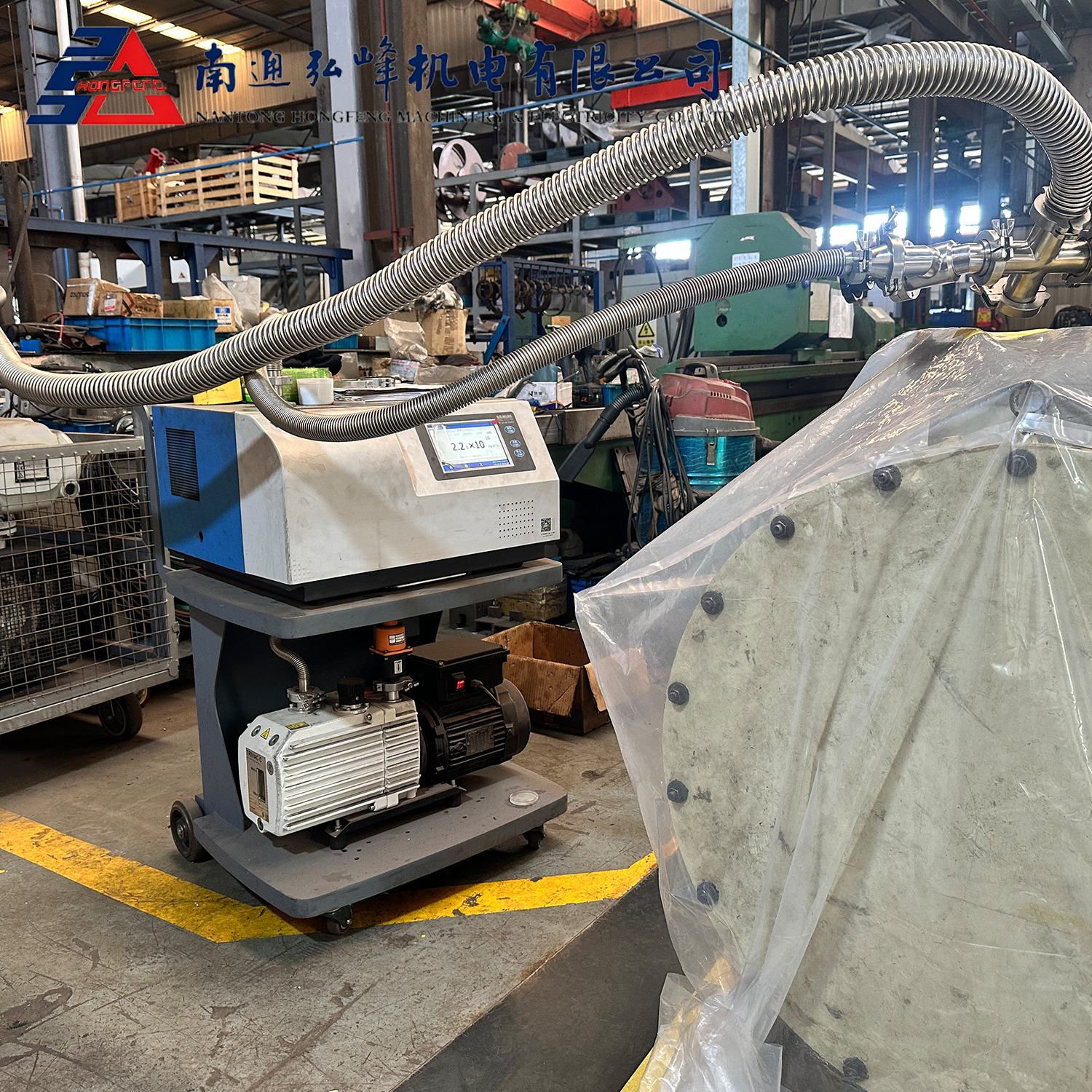
The operational heart of the system is the helium mass spectrometer leak detector. The diagnostic process begins when gas is drawn from the test piece into a high-vacuum chamber. Inside this ultra-clean environment, a durable dual-iridium filament ionizes the gas molecules. These newly formed ions are accelerated and passed through a precisely calibrated magnetic field.
Because helium ions possess a specific mass-to-charge ratio, the magnetic field deflects their trajectory at a highly predictable angle. Heavier or lighter molecules simply strike the chamber walls. The helium ions are steered directly into an ion collector. The resulting electrical current provides an exact, quantifiable leak rate rather than a simple pass or fail guess. High-end industrial units routinely achieve a minimum detectable leak rate of 5.0 x 10⁻¹² mbar l/s, ensuring even the most microscopic permeations are caught instantly.
Depending on the physical geometry of the component and the required sensitivity threshold, operators utilize two primary diagnostic methods.
| Testing Method | Operational Principle | Typical Sensitivity Limit | Best Use Case |
|---|---|---|---|
| Vacuum Testing | The part is placed in a vacuum chamber. Helium is introduced inside the part or sprayed outside. | 10-12 mbar l/s | High-precision components, aerospace parts, and hermetically sealed medical devices. |
| Sniffer Testing | The part is pressurized with helium. An operator uses a handheld probe to scan the exterior. | 10-7 mbar l/s | Locating exact leak points on large assemblies, plumbing joints, or pressurized tanks. |
Upgrading to a high-precision methodology is driven by the severe hidden costs of older testing protocols. Relying on outdated methods creates a dangerous false sense of security on the production line.
Water bubble testing relies entirely on human observation. A technician pressurizes a part, submerges it in a water tank, and watches for rising bubbles. This method is highly subjective and notoriously prone to human error. It is physically impossible for the human eye to see micro-leaks smaller than 10-3 mbar l/s. Furthermore, submerging industrial components in water introduces moisture into the workflow. This often triggers oxidation or catastrophic short circuits in sensitive electronic assemblies later down the line.
Pressure decay testing measures a drop in internal pressure over a specific time frame. While automated, it fights a losing battle against thermodynamics. According to the ideal gas law, pressure is directly proportional to temperature. A minor drop in ambient factory temperature can easily mask a genuine pressure loss, leading to a false pass. Helium detection circumvents this entirely by directly measuring the mass of the escaping tracer gas. The results remain completely immune to sudden temperature fluctuations and volume changes.
Relying on pressure decay for high-stakes components results in hidden leaks quietly entering the global supply chain. Consider a hermetically sealed sensor used in modern automotive braking systems. If a micro-leak passes a rudimentary pressure decay test but allows moisture ingress over a three-year period, the internal circuitry will eventually corrode. The resulting product recall and severe brand damage far outweigh the initial investment required for proper tracer gas technology.
The demand for extreme precision is not universal across all manufacturing. However, for specific critical industries, hermetic integrity is the absolute baseline for safety.
As the global transition toward alternative energy accelerates, the structural integrity of hydrogen fuel cells is under intense scrutiny. Hydrogen molecules are exceptionally small and prone to permeation. Testing containment vessels with pure hydrogen poses severe explosion risks on the factory floor. Helium serves as the perfect safe surrogate. If a high-pressure cylinder successfully contains helium during a rigorous mass spectrometer test, engineers can confidently deploy it for hydrogen storage in the field.
The electric vehicle sector relies entirely on the stability of lithium-ion battery technology. These energy-dense cells are notoriously sensitive to ambient humidity. Even microscopic moisture ingress reacts violently with the internal electrolyte, generating hazardous gases and potentially causing thermal runaway. Manufacturers utilize automated tracer gas protocols to verify the hermetic seals of individual battery cells, outer pack casings, and complex liquid cooling circuits.
Components designed for space exploration must operate flawlessly in a brutal high-vacuum environment. A microscopic leak in a satellite propulsion thruster jeopardizes a multi-million-dollar mission in seconds. Aerospace engineers rely exclusively on helium mass spectrometry to achieve the rigorous 10-11 mbar l/s sensitivity thresholds mandated by international space agencies.
Selecting the appropriate system requires a hard look at technical specifications, physical production environments, and operational throughput targets. You cannot just look at a brochure; you have to match the machine to your floor's reality.
The very first step is defining the maximum allowable leak rate for your specific product. This calculation is derived from the product internal volume, operating pressure, and expected operational lifespan. Matching the machine specifications to your industry required reject rate is vital. High-performance units provide a wide measurement range, often spanning from 10-12 down to massive gross leaks, ensuring versatility across different product lines.
In a fast-paced manufacturing environment, production throughput is tied directly to cycle time. The speed at which a test is completed depends heavily on the capacity of the internal roughing vacuum pumps. Larger, more robust pumps evacuate atmospheric air from the test chamber much faster. For example, a system equipped with a high-capacity rotary vane pump will cut pump-down times by half compared to standard models, allowing the mass spectrometer to begin its measurement sooner. Evaluating the internal volume of your test parts against the pump speed prevents costly production bottlenecks.
For field maintenance or pipeline inspection, handheld portable sniffer units are ideal. They offer necessary mobility in confined spaces. Conversely, for mass production environments like automotive parts manufacturing, stationary automated inline systems are mandatory. These robotic vacuum chambers integrate directly into the existing assembly line, providing 100% automated quality control without manual operator intervention.
For engineering directors and procurement managers, integrating high-precision testing protocols involves significant financial evaluation. The primary dilemma often boils down to four distinct paths.
Renting is highly practical for short-term operational needs, such as R&D validations or periodic maintenance shutdowns. Purchasing becomes the most logical financial decision when leak testing is a continuous part of the daily manufacturing process. Owning the system outright lowers the total cost of ownership over a multi-year timeline and allows for deep software integration with internal quality management networks.
If a facility already utilizes massive vacuum chambers, retrofitting is a highly cost-effective strategy. By retaining heavy steel chambers and existing pneumatic fixtures, facilities can integrate modern helium leak detection equipment and upgraded vacuum pumps to achieve current sensitivity standards. However, complete replacement is necessary when legacy systems suffer from chronic mechanical failures or microscopic vacuum leaks within the chamber itself.
Acquiring top-tier technology is merely the first step. The long-term efficacy of any mass spectrometer relies entirely on rigorous, scheduled maintenance. Without precise calibration, even the most advanced systems eventually yield compromised data.
Over time, internal components undergo severe physical and chemical stress. The ion source filament degrades through continuous electron emission. Internal sensors become subtly contaminated by microscopic debris or residual machining oils outgassing from tested components. This cumulative wear leads to sensitivity drift. Annual calibration conducted by certified technicians is an absolute necessity. Technicians clean the ion source, replace worn filaments, and verify the vacuum pump efficiency.
Daily verification is equally important for continuous production environments. Operators manage this using standard leaks. A standard leak is a precisely engineered reference device that releases tracer gas at a constant, mathematically verified rate. Before a testing shift begins, operators introduce the standard leak into the system. If there is a discrepancy, the operator must tune the detector before testing any actual products. Many modern units feature built-in standard leaks that automate this daily calibration check entirely.
The landscape of industrial testing is continually evolving. We are seeing a relentless push for component miniaturization alongside a demand for greater operational data transparency. As semiconductor manufacturing and implantable medical devices become smaller, acceptable leak rate thresholds drop exponentially. Industry data points to a massive shift toward inline, 100% automated testing rather than batch sampling, driven heavily by zero-defect mandates in the EV and aerospace sectors.
Concurrently, the fluctuating global supply of helium gas has spurred the development of integrated helium recovery systems. Instead of venting the tracer gas into the atmosphere after a test cycle concludes, forward-thinking manufacturers utilize closed-loop recovery units. These systems capture, purify, and re-compress up to 95% of the exhausted helium. This sustainable approach drastically lowers long-term operational expenditures and insulates facilities from supply chain volatility.
Modern detectors are also no longer isolated machines. They act as fully connected nodes within a smart factory ecosystem. IoT-enabled systems feed real-time leak rate data directly into factory ERP systems. This means modern equipment predicts potential seal failures based on historical data trends and alerts maintenance teams to pump wear before a breakdown occurs.
Outdated testing methods are a serious liability in today's precision-driven manufacturing landscape. Relying on visual bubble tests or thermodynamically flawed pressure decay methods leaves your production line vulnerable to hidden micro-leaks. These oversights cause devastating product failures and severe brand damage.
Helium mass spectrometry ensures absolute product safety and reliability. By utilizing an inert, highly penetrating tracer gas, modern detectors offer unmatched testing precision. The long-term benefits of automated inline testing, reduced recall rates, and total brand protection are undeniable.
If your facility is still relying on water baths or basic pressure decay, it is time to upgrade. Protect your production line and ensure absolute product reliability. Explore the full range of high-precision helium leak detection equipment at Hongfeng Machine to find the exact configuration tailored to your specific throughput and sensitivity requirements.
The sensitivity depends heavily on the testing method employed. High-end vacuum chamber systems test parts in a completely evacuated environment and can detect microscopic leaks as small as 10-12 mbar l/s. Handheld sniffer probes used for localized testing on pressurized components typically detect leak rates down to 10-7 mbar l/s.
Yes, it is exceptionally safe. Helium is an inert, noble gas. It does not chemically react with other elements, metals, or sensitive electronic components. It is completely non-toxic, non-flammable, and non-explosive. This makes it an ideal tracer gas for use in enclosed manufacturing environments and cleanrooms.
While hydrogen is less expensive and possesses a slightly smaller molecular size, it presents significant safety challenges. Hydrogen is highly flammable and explosive when mixed with oxygen at concentrations above 4%. Helium provides the perfect balance: a tiny atomic size for maximum penetration without any of the combustion risks associated with hydrogen.
The cost varies widely based on the system configuration. Portable sniffer units are relatively affordable, while fully automated, custom-built robotic vacuum chambers for inline automotive production require a larger capital investment. However, facilities typically recoup this cost quickly through the elimination of false passes, reduced labor costs, and the prevention of expensive product recalls.
Hard vacuum testing involves placing the component inside a sealed chamber, evacuating the air, and measuring the helium that permeates through the part. This method is highly automated and offers the highest possible sensitivity. Sniffer leak detection involves pressurizing the part with helium and using a handheld probe to manually scan the outside of the part to locate the exact physical location of a leak. Sniffing is less sensitive but excellent for pinpointing specific repair spots.
Routine preventative maintenance, such as changing the oil in rotary vane pumps and replacing exhaust filters, should be performed every three to six months based on testing volume. Formal calibration using a certified standard reference leak must be conducted at least annually to ensure the mass spectrometer maintains its accuracy and complies with ISO quality standards.